
Abel Matutes Prats Interview. Defining The Unexpected.
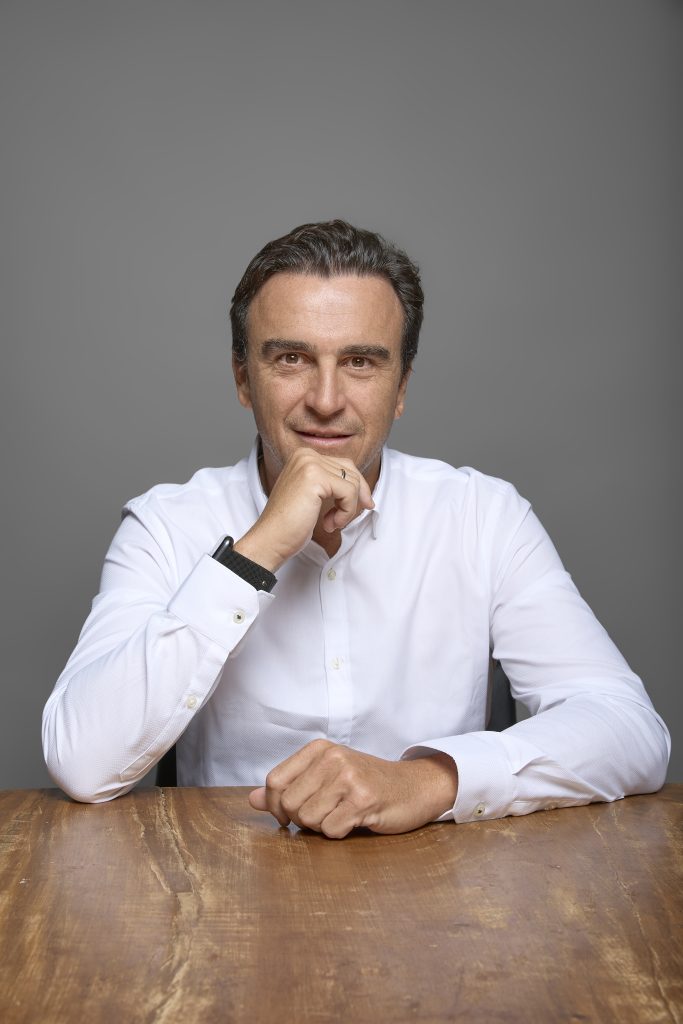
It was an unseasonably warm and sunny weekend when I visited Madrid in April to interview one of Spain’s most influential and powerful businessmen. Abel Matutes Prats is the sixth generation of the Matutes family to inherit the Abel name. He is the firstborn son and heir to Abel Matutes Juan, a prominent Spanish businessman, banker, and retired politician who served as Spain’s Minister of Foreign Affairs from 1996 to 2000.
The family is staunchly monarchist and conservative in its politics and religion. In business, they are regarded as intelligent, efficient and visionary, relying on a nurtured network of local Ibicenco families and access to the corridors of power in Europe and Rome.
They divide opinion in Ibiza; some see them as entrepreneurial opportunists, others as shrewd and feared adversaries, but the one thing everybody agrees on is that on home soil, they are King. You are either part of the Royal court, or you are not. Those outside the noble entourage are the sharpest critics; those inside are loyal and adhere to a traditional echelon linked to the Roman Catholic Church and the Spanish Crown. I have always believed that to understand a person, you must travel to where they live. Culture and environment shape us all, and while Abel Matutes Prats was born in Barcelona and raised in Ibiza, he now resides in Madrid and runs his business there.
It was my first time visiting Madrid, and it was an enchanting city. The undisputed political, financial, and cultural alpha male of Castilian identity is rich in architectural, artistic, religious, and literary traditions. The locals are called Gatos and view their home as “De Madrid al Cielo,” from Madrid to Heaven, suggesting it’s close to paradise. In the three days that I spent there, I could not argue with the sentiment. I visited the Basilicas, walked with religious processions, dined on delightful tapas and Bocadillos de Calamares and breakfasted on Churros and Chocolate at Sant Ginés. Madrid held my hand, as only she can and allowed me to discover her elegant personality on my own terms, just like Ibiza.
It was just after 11 am when I pulled up outside Abel Matutes’ offices in a Bolt Taxi driven by its colourful Dominican driver who was celebrating his 28th year living in the city. “Madrid people are always in a hurry, as they like to sleep, eat well and party late into the night. I love Madrid, as many people from South America and the Dominican Republic work and live here, he lyricised rhythmically as we travelled on the 20-minute drive from my accommodation in Plaza Mayor to the full-on sound of Tomans Verano En Ny pumping from the car’s stereo. If anything, I could say that this cab was rare, as he dropped me outside the front door of the nondescript concrete building that housed the Paladium Hotel Group’s international headquarters. Able Matutes Prats and The Paladium Hotel Group currently manage 12,814 rooms in 43 hotels that incorporate nine individual brands. From Mexico to Cancun, the Dominican Republic, Jamaica, Italy, Brazil, Marbella, and New York, to where it all started in Ibiza, the Matutes family has never lacked ambition and vision.
A feeling of trepidation accompanied my steps as I walked into reception to announce my arrival. I arrived early so I could relax and observe the environment before entering the lion’s den. We had arranged to meet many years ago, but unforeseen circumstances had led to a late cancellation. So it was my first time officially meeting the Matutes family. The interview was agreed to be centred on Ushuaia, the families’ venture into the clubbing industry in Ibiza, and its vision for the future. It is rare to see Able Matutes Prats at any of his clubs in Ibiza, so I was intrigued to find out why he came up with the concept in the first place, as the family had never shown any interest in the clubbing industry before the Ushuaia launch in 2011. Yes, they owned Space but were silent partners; Pepe Rosello rented the venue from them because he had the relevant skills and knowledge in that area. So that was going to be the main direction of my interview. I knew I was privileged to get an hour of his time, so I kept it simple and on point. The fun taxi ride and early arrival meant I could relax and enjoy a smooth cup of coffee and a glass of water as I waited for the interview.
I was surprised when Abel quietly swooped through the door with an outstretched hand to introduce himself. “Danny, a pleasure to meet you. Would you like to come to my office, and we can do the interview there?” I stood up to shake his hand and followed him to a modern office lit by natural sunlight from a large window overlooking a manicured lawn. He gestured for me to sit on a homely couch opposite his desk in the square room. He sat to my right in a comfortable armchair, flanked by the window and a credenza-style sideboard. Amongst the family photos was a picture of King Felipe VI of Spain standing prominently on the table. The Paladium offices were close to the stunning Royal Palace and his Madrid base in the ultra-exclusive La Finca urbanisation in Pozuelo de Alarcón.
With pleasantries exchanged, the clock was ticking on my interview time. So we began.
I wanted to know why the Matutes family decided to enter the clubbing industry after decades of operating family-themed hotels. Abel Matutes Prats is the 49-year-old President of The Paladium Hotel Group, a sixth-generation Ibicenco who inherited the Abel name, given to the firstborn son and heir of its lineage. He was born in Barcelona in 1977, the year that Elvis left his mortal coil. Abel was raised on the island during a golden era for Ibiza tourism in the 70s and 80s. Under the wing of his father, Abel Matutes Juan, he spent several years in Brussels learning the skills of diplomacy, liberal education and networking. In Spanish culture, the three-hyphenated title recognises both the Father’s and Mother’s family surnames in marriage. His father was Matutes, and his late mother Prats, so he was christened Abel Matutes Prats.

We are more Balearic than the rest
The Matutes were always avant-garde in their blood. They pioneered Ibiza’s first electricity power plant in 1907, established the island’s inaugural bank in 1886, and built the cross-Atlantic ships that served during the Second World War, when Spain was neutral. All established by the patriarch of the family, Abel Matutes Torres, the great-grandfather of the man who sat opposite me.
From shipbuilding to banking and hotels, each firstborn son of the Matutes lineage established their own personal legacy. So my first question to Abel was: why did he choose music to transition a traditional hotel legacy into a modern powerhouse of luxury and entertainment?
“To be honest, I am not too much into music. In my job operating a multinational Hotel business, I need to be up early in the mornings. I tend not to be in Late-night clubs. I have only been to UNVRS twice. I was 33 when I started developing the Ushuaia concept. I could relate to the concept because much of my personal time and entertainment was spent al fresco during the daytime. I wasn’t staying out late at clubs until the morning, as I had to be up early for work.
Hence, the Ushuaia concept was something that someone of my age and demographic, who probably has more purchasing power than someone at 20, would appreciate more than a club where the main DJ was appearing at 3 am.”
After the boom in budget family package tourism that had boosted his father’s Fiesta Hotels group’s finances in the 70s and 80s, profits stagnated in the mid-90s and early noughties. This period witnessed the emergence of the North African and southern Mediterranean tourism model, which offered better facilities at a fraction of the cost. They could offer lower prices while maintaining higher margins, and this competition was having a detrimental effect on the ageing budget Balearic tourism model established by the Fiesta Hotels.
“Now it’s hard for people to believe, but Ibiza wasn’t a profitable place for hotels. It started struggling in the 90s, and in the 2000s, it was a place where, if you wanted to invest, you weren’t getting a payback. You were burning money. We sold many hotels in Ibiza during this time. There was a moment as an Ibicencian, it was very sad for me to see the place I love the most, the place where I belong, was basically sinking. The Ibiza I had wanted and remembered from childhood was no longer there.”
“In that time, Ibiza wasn’t differentiated. Yes, it had clubs like Pacha, Space, Privilege, and Amnesia, which were magic, but there was a perception that tourism in Ibiza had to be cheap. If you had money, you could buy a villa in Ibiza, but you would not go to a hotel on Ibiza, as there were no five-star hotels on the island. Now it sounds unbelievable, but there was a perception that there was no room for a 5-star hotel in Ibiza. It was even hard to make a profit at 4 stars, to the point that several companies changed from 4 stars to 3 stars to reduce service and costs. That happened to us.”
This was the moment that the young man decided to step out of his father’s shadow and carve out his own path. To achieve success and independence on his own merits, and to define his creative breakthrough. The new high-risk luxury business model for Ushuaia was not well received by the elder lemons on Grupo Matutes’ board. It took Abel three years to finally convince them to invest 23 million to redesign and refurbish the old family-themed Fiesta Hotel Playa den Bossa into what is now The Ushuaia Beach Hotel.
“I started to put forward to the board the idea that we either remain the same, or start to offer an added value that people are willing to pay for. At the time, people in Ibiza and in our company said it was impossible to make a 5-star hotel profitable. Maybe the reason it hasn’t been done is that it doesn’t work, they said.”
Even his father had reservations about the concept, but Abel used his natural Ibicenco charm and diplomacy skills to convince them to proceed “I knew that, for us, the only way to survive was to trend toward 4 and 5 stars”. For his father and the board, it was a corporate revolution rather than an evolution.
Then the good fortune that the Matutes family are known for shone down upon the fresh prince. The thing about gifts is that sometimes they show up in the form of pain. Until the dawn of independent online booking companies like Tripadvisor, Booking.com, and Agoda, it was impossible for a big hotel in Ibiza to open without a tour operator’s contract in place. The UK tour operators controlled the market and could dictate to the Ibicencos how much they would pay for a room. In the late noughties, Thompson dropped a bombshell on the Fiesta Group by cancelling their contract for Hotel Playa den Bossa and Hotel Club Playa den Bossa. In Ibiza, the pain and the gift can be the same thing.
“We lost the contract with Thompson in the Hotel and Club Playa den Bossa, which is now Ushuaia and The Unexpected Hotel. We lost that contract because Thompson’s family clients were complaining that those hotels were too close to the noise and adult themes of Space nightclub”
When one door closes, another opens.
“So, without the package tourist contracts, we had to shorten our season and rely on independent online bookings. In contrast, those independent clients were happy to pay higher rates just to be close to Space, as it was such an iconic club. It was there that we started to get a lot of clubbing people with purchasing power. We saw traction from the UK, Germany and America”
However, the feedback from those early clubbing clients was that the location was perfect, but the service and quality were not up to standard. Ibiza was not experienced in dealing with the modern independent tourist accustomed to established four- and five-star European and American hotels.
So that was the eureka moment for Abel Matutes Prats in 2007.
“I thought maybe we should design a hotel for these types of people. If the USP for these clients were our proximity to Space, then we would custom-design an experience to suit that market. We then assembled a team to develop that luxury clubbing concept, and that’s how it started. After three years of rejection from the board, we finally got 23 million approval to upgrade the 3-star Playa Den Bossa hotel into a 5-star luxury clubbing venue with events.”
While Abel Matutes Prats was well schooled in the business of operating hotels, he had no experience with the clubbing market. In Ibiza, the Matutes family is known for its skill in recognising key individuals who can add value to the company. Once again, fortune favoured the brave, as Abel Matutes Pratts met a young Frenchman who, like himself, was trying to build a brand in Ibiza. His name was Yann Pissenem.
“I noticed Yann Pissenem when he was renting a small beach club from us in front of the Don Toni, which back then was a family hotel. He was making a lot of noise, which was upsetting our clients at Don Toni, so I met with him and explained our new concept. I said you can do way bigger things with the new concept. Yann came to see it and, after discussing it a bit, said, “Let’s go there.” From the concept’s inception to what we first built at Ushuaia Beach Hotel, Yann was very involved. The concept became a bit bigger also because of the ideas of Yann”
“In Ibiza, we are blessed to have so much sun in the summer. The truth is, when you can be out in the open air having fun in the afternoon, not suffer the next day, and go to the beach, I was sure it was a winning concept. It’s not easy for the market to understand it, because when you create something completely new, how do you explain it?”
That sentiment was reflected in the birth of Ushuaia Beach Hotel on May 28th 2011. Bookings were down, and the party’s headlining DJ, Luciano of Cadenza Records, pulled out at the last minute for personal reasons. Swiss DJ Michael Cleis, Reboot, Robert Dietz and Ernesto Ferreyra carried the flag, but the pressure was felt by the whole team, who had gone all in on a high-risk game of poker.
“Right before the opening of Ushuaia, the bookings were not coming. I planned to open, show the party, and ensure the opening was successful. Then I believed bookings would come. With bookings slow for the opening, of course, I had my concerns inside, but that first day when I felt the vibe, saw the production and the people, that was the moment I knew it was going to work and to be honest, it has worked better than I expected.”
That summer, appearances by David Guetta, Swedish House Mafia, Luciano, Carl Cox, Pete Tong, Calvin Harris, Erick Morillo, Usher, Earth Wind and Fire and The Human League ensured that Ushuaia Beach Hotel was making waves on Playa den Bossa Beach. In the years that followed, the crowds and profits increased, and the industry took notice, especially the established British-controlled sector that had dominated the island for decades. In 2016, after a prolonged legal battle with the UK-backed Pepe Rosello, the Matutes family regained control of Space Ibiza. They shocked the industry by announcing they would demolish the iconic club and replace it with a brand-new venue called Hi.
An online propaganda war broke out as the dominant British promoters fought to protect their electronic territory on the island. Control built up over decades was now under serious threat. While all the negativity surrounding Hi came from one side, the Matutes family and the TNL team at Hi remained silent, in classic Matutes style.
I put that question to Abel. It is the first time he has become uncomfortable during the interview. He paused for a drink of water before he answered, but his reply was clear and measured.
“People who understand me know that I focus on my own things. I try to make the company better every day. I do not invest time and money in fighting. There were indeed attacks, and some of them tried to play dirty, while we will obviously defend ourselves, we tend not to get involved in fighting”.
He then stopped. I waited for him to fill the silence. His final words on the Space Ibiza war were spoken with a wry smile. “They said what we were doing at Ushuaia and Hi was not the real Ibiza, but we are more Balearic than the rest”.
I recognised, in his eyes, the fierce island pride that the Ibicencos are famous for. Defending external attacks with deep regional authority. Vara de Rey and the Monument to the Corsairs mark this Ibicenco resilience.
With the opening of Hi, Yann Pissenem and his team worked hard under pressure and attacks from the usual suspects on the island. I was there to witness it. Yann drafted in his brother Romain to produce all the shows, designing Hi as a “Digital Theatre” for electronic music. Yann dealt with the DJs and, against the wind, secured the residency for the Tale of Us Afterlife party, which was a real rabbit-out-of-a-hat moment.
A magic touch that became his trademark.
He also debuted an unknown South African DJ called Black Coffee, who became an inspired signing. David Guetta was the rock on which Hi was built, and Eric Prydz was another iconic name coaxed out of semi-retirement due to his reported aversion to flying.
The Frenchman, having proven his Midas touch, wisely avoided chartering the same course that his predecessor, Pepe Rosello, had taken at Space. So they sat down to discuss business, which is an ancient ritual for the Ibicencos. In 2016, they formed Ushuaia Entertainment in partnership, which now runs the clubs Ushuaia, Hi, and UNVRS.
“Yann was working with us in Fiesta Hotels as the person in charge of the parties. Then, when we got back Space, which was ours but rented, we decided to do Hi. Yann was adding a lot of value to the concept, and understandably, he wanted to do his own thing. So we decided to form a company between the two of us to rent the buildings we owned to TNL, which would manage all the parties. So we created Ushuaia Entertainment”
In the Space of eight years, Abel Matutes Prats’ vision for Ushuaia Entertainment has redefined it as the creative force that transformed Ibiza into the global capital of daytime clubbing. It is a masterclass in brand evolution, from a young man who disrupted his family’s legacy to pursue the avant-garde.
We discussed a few more related topics, the plans for his company going forward and his next-level vision for Ibiza and its tourism industry. However, to avoid prolonging this article any further, we will return to those plans at a later date. The Ushuaia story was the reason I travelled from Dublin to Madrid to interview the man.
Since I first visited the island in 1996, I have listened to all the stories about the Matutes family, good and bad. They say that time reveals all, and with the benefit of hindsight, I would say the majority of the negative comments come from vested interests, competitors or those who failed to take advantage of an opportunity before the Matutes did.
As an islander myself, albeit from a much wetter one with less sunshine, I can relate to Ibiza’s culture, pride, politics and way of doing business. As stated at the start of this article, to understand a culture, you must understand its people. Both our cultures were raised in the Roman Catholic Church, which instilled faith, moral actions, respect, and an appreciation for art, literature, and architecture. That hierarchical culture, while not perfect, upholds principles such as family, community, integrity, tradition, humility, and a code of ethics in both life and business.
In their actions, I have observed that the Matutes are ritual Roman Catholics, monarchists loyal to the crown of Spain, professional in their business, and charming in their nature.
Abel Matutes Prats is an Ibicenco in Madrid. He is an emblem of modern Spain, a highly developed European country defined by its democratic constitutional monarchy, vibrant cultural exports, and an advanced service-based economy, and one of the most socially progressive nations globally. Spain consistently ranks among the top three most-visited countries in the world, attracting millions to destinations such as Barcelona, Madrid, and the Balearic Islands.
In Spain, as in Ireland, it is said that those from the islands have a particular laid-back, relaxed look about them. They stand out from the crowd. As Ibicencos, the Matutes family have certainly turned heads in Madrid and changed mainlanders’ perception of islanders.
There is something undefinable about them. In English, there is no word to describe it, but in Irish, we have an old Gaelic word: Diamhair.
Related Articles
End Of An Era As Legendary Ibiza Beach Bar Tulp Closes.
End of an era as one of Sant Antoni’s most loved beach bars, the Dutch-owned Tulp will close its doors for the final time next weekend, after 21 years in business.
‘Avin it Large. Kevin and Perry Amnesia Ibiza Review.
There was a freedom to the dancefloor that you don’t always feel anymore.
Ushuaia Entertainment Not For Sale.
While it may look silly, it could actually be revealing another story so unthinkable that it would be earth-shattering.