
The Ibiza Chiringuito Wars. Reasons Why Traditional Ibiza Beach Bars Are Closing.
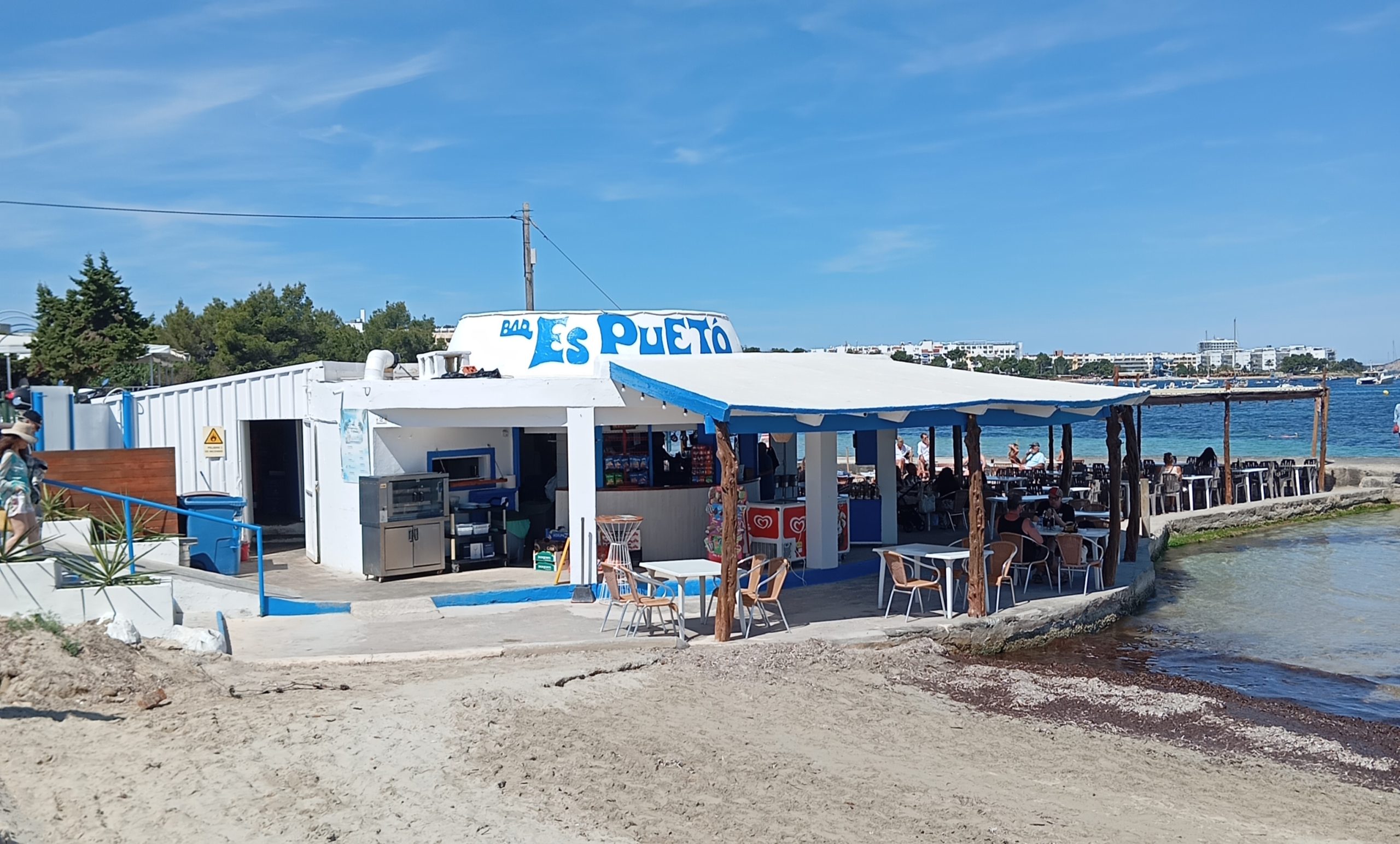
The infamous Spanish Chiringuito Wars, which have raged for ever four decades on the beaches of the Iberian Peninsula, attacking the free-spirited, non-corporate, simple and family-run beach bars, have arrived with vengeance on the island of Ibiza. Recent casualties of the war in Ibiza include Chiringito Chiringay on Es Cavallet beach, Kioska Pedro and Kiosko Hollywood on Cala Llonga beach, and Chiringito Cala Escondida, all of which have been forced to close permanently. The most famous of them all, Sa Trinxa on Sallinas beach, and Chiringuito Es Pueto on Playa Es Pueto in Sant Antoni, have been wounded in action. So what is happening in Spanish politics that has led us to this situation, and can it be resolved?
The root of this conflict goes back to 1988 and the introduction of a landmark piece of legislation, the Ley de Costas, by the socialist led PSOE government of Prime Minister Felipe González. The controversial law aimed to protect Spain’s environmental shoreline and the public’s access to it by nationalising the coast and stopping speculative property development. It established a 100-metre protection strip from the shoreline, where building was strictly prohibited. Hundreds of family-run Chiringuitos, operating since Spain’s tourism boom in the 1960s, were immediately deemed illegal under the law as they were classified as physical structures, i.e., concrete buildings. Under the Grandfather Clause, those buildings were permitted to operate on temporary concessions, setting a ticking clock toward their closure.
The term Chiringuito has colourful Cuban roots, originating as slang for a sugar cane worker’s drink called Chringo. Spanish journalist César González Ruano introduced the term to a beach bar in Sitges, Spain, in 1949. Stiges was also the birthplace of the iconic Ibiza club, Pacha. This led to the rise of chiringuitos along the Iberian coast during the tourism boom of the 1970s and 1980s. These simple beach huts served fresh fish, rice, coffee, beers, and tapas, welcoming both locals and tourists alike. Over time, owners reinvested in their businesses, enhancing facilities while maintaining their charm.
As Governments came and went, the Grandfather Clause of temporary concessions was observed. Under a fixed-lease arrangement, the local council would put the tender for the operation of the Chiringito out to public auction, just like the parasol and sunbed tenders on the beaches in their municipality. Unless the incumbent tenant was retiring, the family in situ on the property would always have first refusal and, in the majority of cases, would be awarded the tender, as there was little competition to run them, since they made a modest profit for the hard work. Plus, the locals would support the family running it, and if they were popular, no one would dare bid against them, since they were offering a valued community service where everybody knew your name.
However, that harmonious mood music began to change in 2009 when the PSOE government’s Ministry for the Environment issued an ultimatum to vacate the beaches permanently and move inland. This sparked public outrage and major protests, the epicentre being in Andulicia, and it was dubbed the “Chiringuito Wars.” Facing intense public and business resistance, the government backed down, allowing the Chiringuitas to remain but with new size and environmental protection limits introduced. In the following elections, the PSOE government was voted out of power, and the PP party was elected into government. The acrimonious 2009 standoff was the stage for the PP government to grandstand on.
In 2013, the Mariano Rajoy-led PP Government radically reformed the laws passed by their political opponents. They dismantled the strict enforcement of the Costa Laws and introduced new legislation, Ley 2/2013, which granted chiringuitos long-term, 75-year concessions and permanent legal security on the beaches. The law ended the threat of demolition and provided chiringuito owners with legal property, sale, and inheritance rights. This transformed the chiringuito business model from insecure, temporary seasonal operations into secure, long-term assets that could be banked. If the intention was to disable the socialist built Ley de Costas ship, then the 2013 amendment struck with the deadly accuracy of a Spanish Man O’ War. The new legislation ensured a period of calm waters for the Chiringuito owners, who began to see the potential and profit in offering a more upmarket product. Ibiza and its party scene led the way, with several Chiringuitos on the island that established themselves as daytime party venues serving expensive bottles of premium champagne and spirits.
However, a storm was brewing in the distance as the European Parliament gatecrashed the Chiringito party, changing the game completely. In February 2023, the European Commission issued a formal infringement procedure against Spain and its protected Chiringuitos. It stated that Spain’s Ley de Costas violated Article 12 of the EU Services Directive, which concerns fair competition laws. Free-market best-practice principles mandate that public-domain beach concessions be awarded through a structured, open, and impartial public tender process. The Commission argues that Spain routinely bypasses this directive by automatically renewing leases for existing bar owners. They have directly targeted the 75-year lease law introduced by the PP party in 2013, stating that these long-term leases block European entrepreneurs from accessing the free market, a core principle of EU policy. They issued Spain a formal warning, a final notice to address the situation before they take legal action.

The Political Football
If Spain fails to remove the 75-year lease law and open up the market, Brussels has stated that it will refer the case to the Court of Justice Of The European Union, which would trigger costly fines in the region of a million euros a day. To avoid these massive EU fines, Spain’s Ministry for Ecological Transition has been forced to open public consultations to rewrite its Ley de Costas. This is the reason the PSOE government cites for the aggressive closure action taken by local councils in Ibiza and Formentera: to reject lease extensions, issue eviction notices, and dismantle long-standing beach Chiringuitos. They are complying with the EU directive to close the Chiringuitos before punitive fines are levied. Spain does not want to be viewed as breaking European Laws, especially when it receives EU funding for regenerative projects such as the redevelopment of The West End in Sant Antoni.
In a clever political move, the PP party recently raised the issue in the Spanish Senate, a forum where, unlike the main house, they hold the majority. While the Senate cannot veto laws passed by the PSOE coalition government, it can delay legislation sent to it for approval. This tactic has placed Pedro Sanchez between a rock and a hard place.
They say all politics is local, and the PP have played to the gallery of local sentiment in Ibiza, which firmly lies with the family-run Chiringuitos, who are seen as the backbone of the local community. They are painting the PSOE as the villains in this drama and are now strategically well-positioned to garner votes when national elections take place in May next year. If the PP win that election, they already hold a majority in all five local Ibiza municipalities, they will be the officials in office when a deal is brokered with Brussels.
However, there is a sting in the tail for those who support the family-run Chiringuitos in Ibiza. By opening up the market, the tendering process for the Chiringuito concessions will greatly favour corporate bidders. We have already witnessed this in Formentera, where new owners outbid small, family-run Chiringuitos like Pirate Bus. Large, heavily capitalised hospitality groups, international hotel chains, and luxury lifestyle brands can easily outbid local families, driving them out of the market.
The PP party is perceived as representing corporate interests, while the PSOE is seen as a socially and environmentally friendly party. When the EU directive is implemented, it will represent a win-win scenario for the PP party. At the same time, the PSOE will be left holding the smoking gun that killed the family-run Chiringito business model, damaging local culture.
At the start of this blog, we asked whether the current situation surrounding the Ibiza Chiringuitos could be resolved. I think it will be, but not in the way most people living on the island would like. I predict that the family-run Chiringuitos at the centre of this war will be permitted to operate for another season or two, allowing the political heat to fade while allowing the incumbent tenants to exit on their own terms. Then the corporate sharks will quietly move in and devour them, and another piece of old Ibiza will be lost. I don’t think the current buildings will be demolished.
Within 3-4 years, I would guess all of Ibiza’s beach chiringuitos will be operated by corporate entities. But that’s show business Ibiza style, baby.
Related Articles
Ibiza Mourns Death Of Ball Pages Cultural Icon Toni den Planes.
Born in 1931, Antoni Planells Tur, affectionately known as “Toni d’en Planes,” played a crucial role in preserving Ibicenco folklore and culture.
Abel Matutes Prats Interview. Defining The Unexpected.
The Evolution of Ushuaïa Ibiza. A masterclass in brand evolution: A story of private struggles behind the public success of Ushuaia Entertainment.
Ibiza Opening Party Weekend 2026 Review
For the very first time, Ushuaïa, Hi Ibiza, and [UNVRS] all opened on the same weekend, 24 April 2026. Read our exclusive review of the TNL parties.